


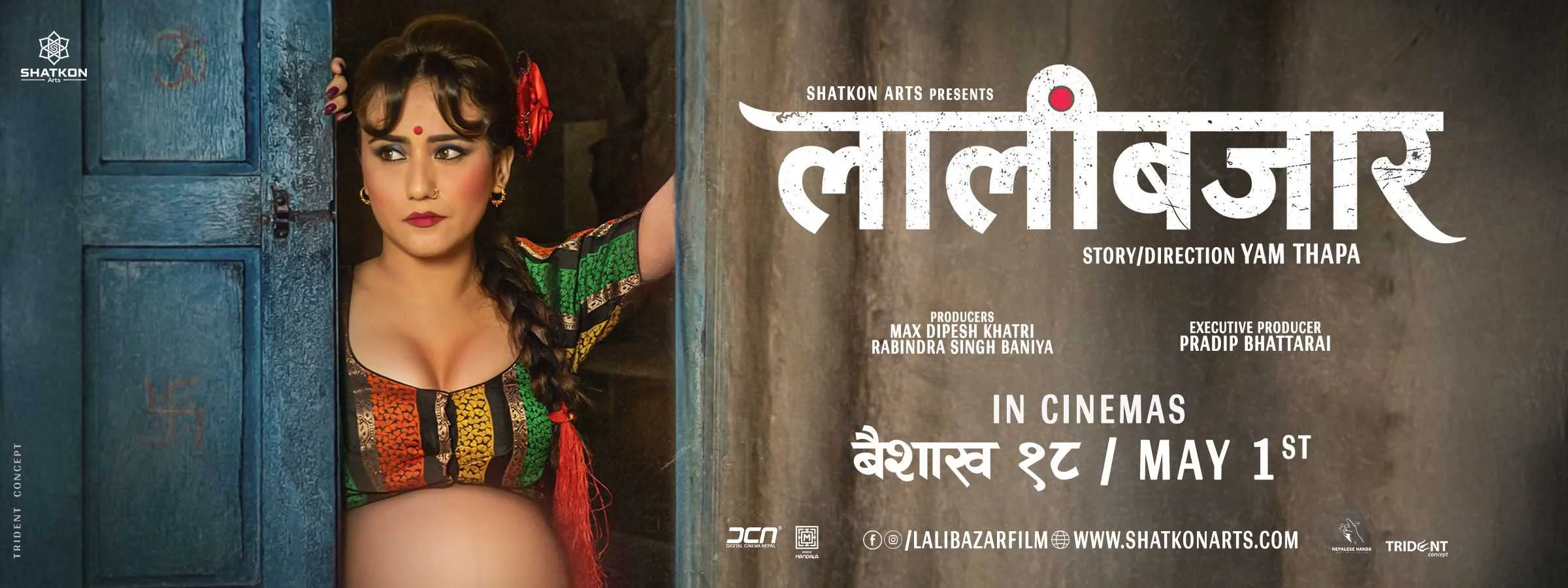
Kathmandu — The legal battle surrounding Laalibazar has thrust Nepal's film industry into one of its most significant debates about artistic freedom in recent years. The Patan High Court has issued a temporary order barring the film's screening until Baisakh 22, following a writ petition filed by an individual who claimed the film's content was offensive to a community — despite the film having already cleared the Central Film Censor Board with a Universal certificate.
The industry's response has been swift and unified. The Nepal Film Producers' Association, Nepal Film Association, and Nepal Film Directors' Society have all issued statements condemning the last-minute restriction, and filmmakers staged a peaceful silent protest at Maitighar Mandala, wearing black armbands and observing 15 minutes of silence.
Nepal Film Producers' Association President Uday Kumar Ingnam did not mince words: "Film is not only a means of entertainment but a powerful medium of thought and expression. Stopping a film's screening on the basis of allegations made by a single individual — just as it was ready to release — has made the entire industry uncertain. When the state's own legitimate body, the Central Film Censor Board, has granted permission, stopping the release undermines the morale of independent investors and creators."
Nepal Film Directors' Society President Janakdeep Parajuli emphasized the broader creative stakes: "Creators should be able to freely present their work within the constitutional guarantee of freedom of expression. A film is the result of the long-term dedication and creative labor of directors, writers, artists, and hundreds of technical crew. Stopping it at the last moment causes not only financial but artistic damage."
Nepal Film Association President Narendra Maharjan pointed out that theaters also suffer when films are halted without consultation, calling for courts to consult the Film Development Board and Censor Board before issuing such orders.
The controversy has also revived the precedent set by a Supreme Court ruling in 2075 BS on a similar case involving the Badi community. In that decision, the court found no grounds to issue a prohibition order against films or publications based on community-related content, while directing the regulatory bodies to monitor material that could demean a community's dignity. Laalibazar has complied with all regulatory requirements, including removing specific dialogue flagged by the Censor Board and adding a disclaimer stating that all characters and events in the film are fictional.
What the Badi Community Itself Says
Perhaps the most powerful voice in this debate belongs to the Badi community activists who actually watched the film. Their response has been one of support, not objection.
Activist Devisara Badi was moved to tears: "We have seen the film. The words we objected to were removed by the production team, and we are grateful. This film does not hurt our community's feelings. On the contrary, it shows our struggle and our resistance. It gives us even more courage to fight for our rights."
She added that her organization intends to screen the film for community women once it receives clearance for public exhibition.
Activist Hikmat Badi was equally clear: "This is a story of a mother from the Terai. After the words we objected to were removed, there is no reason for objection or a ban. We are raising our voice against exploitation in the streets — and now the arts are also beginning to amplify our resistance. I see nothing wrong in that."
Other community members including Padam Rana Badi and Ramesh Gandharva Badi confirmed they had watched the film and found no scenes or dialogue that should cause community offense.
The irony of the situation is stark: the community whose story is being told is asking for the film to be shown, while an outside petition has sought to stop it.